Cotton
Hand-picked, roller-ginned lint from Northern and Eastern Uganda — the staple length and cleanliness textile mills ask for.
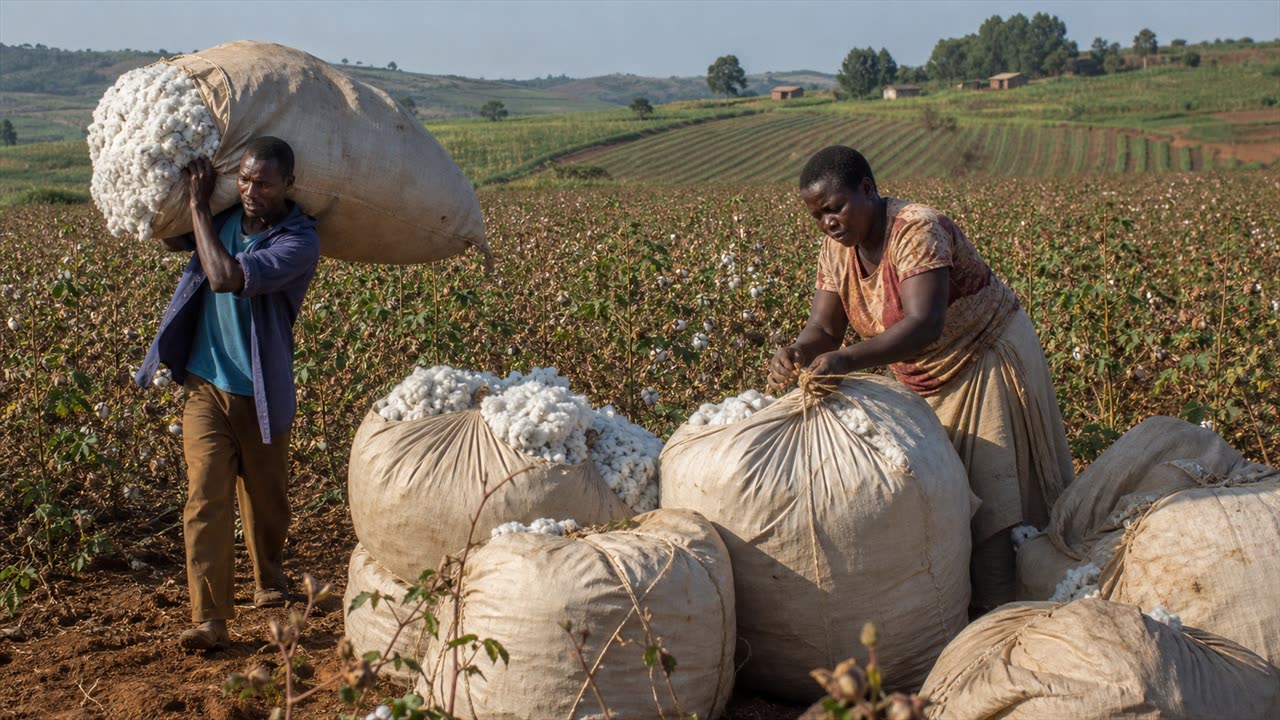
The Crop
Hand-picked lint, mill-ready bales
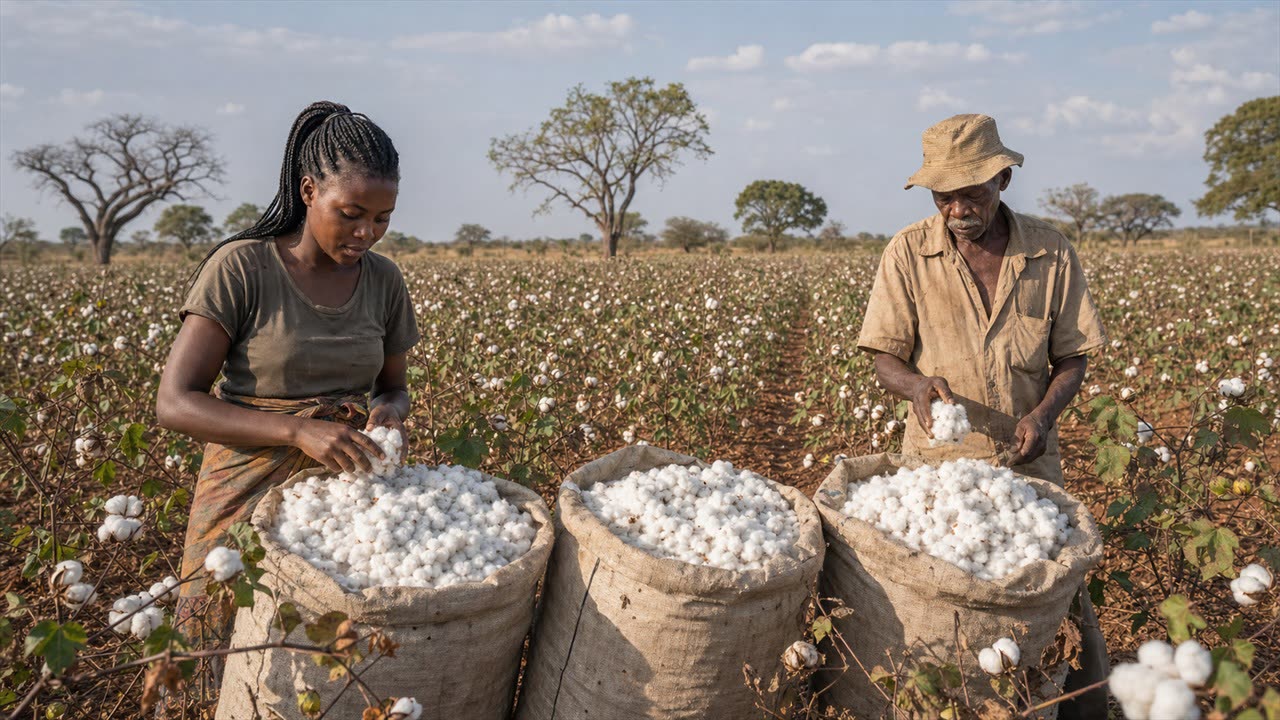
Our cotton is rain-fed and hand-picked by smallholder farmers across Northern and Eastern Uganda. Hand-picking is slower — and better: only open, mature bolls are taken, which means low trash content and none of the plastic contamination that haunts machine-harvested origins.
Seed cotton is roller-ginned, the gentle method that preserves staple length, then classed by staple, grade and micronaire before baling. What reaches your mill is lint that spins clean and even.
How We Prepare It
From boll to bale
Hand Picking
Multiple passes through the season, taking only open, mature bolls into clean cotton harvest bags — no leaves, no plastic, no shortcuts.
Roller Ginning & Classing
Gentle roller ginning preserves fibre length, then every lot is classed by staple, grade and micronaire.
Baling & Export Prep
Pressed into fully wrapped bales, moisture-checked and container-loaded under supervision for a clean arrival at your mill.
Buyer Specifications
Cotton, on paper
Typical export specification — classing reports and pre-shipment samples available on request.
| Type | Rain-fed Ugandan upland cotton, hand-picked |
|---|---|
| Staple length | 28–30 mm |
| Grade | Grade A lint |
| Micronaire | 3.8–4.5 |
| Trash & contamination | Low trash · contamination-controlled handling |
| Bales | ≈185 kg, fully wrapped |
| Availability | Ginning season Dec–Apr |
| Minimum order | 1 × 40 ft container (~52 bales) · trial volumes on request |
| Samples | Classing sample per lot on request |
| Documentation | Certificate of origin · phytosanitary · full lot traceability |
| Incoterms | FOB Mombasa · CIF destination port on request |

Ready When You Are
Request a cotton offer
Tell us your volume, destination port and timeline — our trade desk replies within one business day.